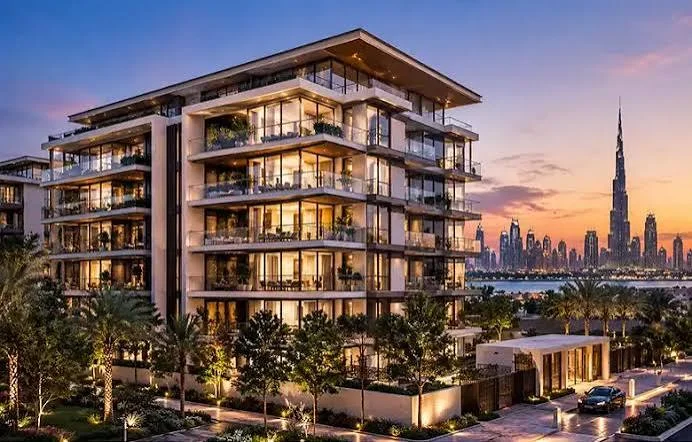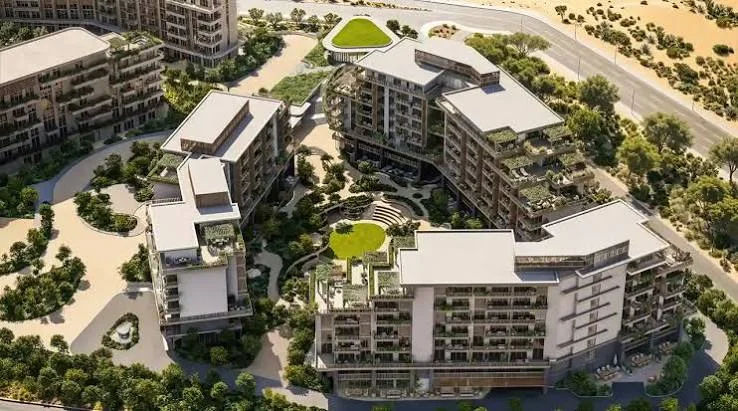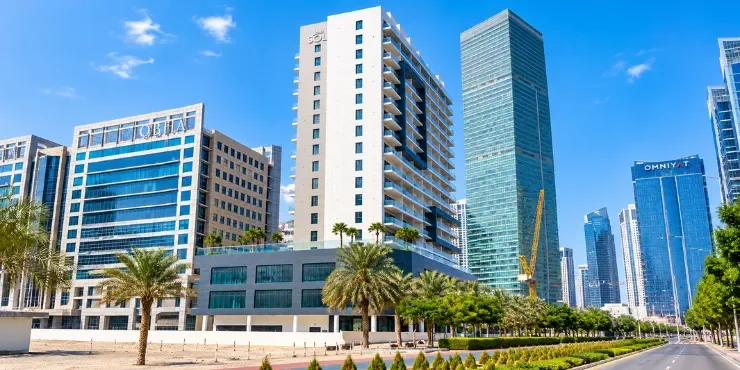
Is Emaar South a Good Investment in 2026? Prices, Rental Yield, Growth Potential & Risks
For buyers checking an Emaar South investment, the short answer is: it depends on your time horizon. This Emaar Properties community keeps coming up in every conversation about Dubai's next growth corridor, and for good reason. Sitting minutes from Al Maktoum International Airport (DWC) and built around an 18-hole championship golf course, Emaar South is Emaar's big bet on the far south-west of the emirate. But "next big thing" and "good investment" aren't always the same thing. Here's a grounded, data-backed look at Emaar South prices, rental yield, growth potential, and risks in 2026.
Quick Answer - Yes, Emaar South is a good investment for medium-to-long-term investors (5–10 years) but not for those chasing quick cash flow. Prices start around AED 850K–1.05M, with a community median of AED 1,546/sq ft. Gross rental yields realistically run 4–6% (marketing sources claim up to 6–9% on smaller units). Growth is driven by the AED 128B Al Maktoum International Airport (DWC) expansion, which sits minutes away. The main risk is a 2027–2029 supply wave across Dubai South that could outpace demand if airport-driven population growth lags behind delivery timelines. Bottom line: strong for patient, off-plan-comfortable investors; weaker for those wanting immediate income or a fully-built neighborhood today.
Emaar South Property Market in 2026
Emaar South offers a range of residential properties across multiple developments, so prices vary depending on the project, property type, size, location and completion status. Recent market data shows that off plan projects Emaar South continues to attract both end users and investors, with off-plan properties accounting for a significant share of transactions. According to market data, apartments in Emaar South were priced at approximately AED 1,677 per sq. ft., while the broader Emaar South market was around AED 1,569 per sq. ft. These figures illustrate why investors should compare individual properties rather than rely on a single average price.
What Rental Yield Can Investors Expect in Emaar South?
Rental income is an important part of the Emaar South investment case. Market data indicates that Emaar South properties can generate rental yields in the mid-single-digit range, although actual returns vary significantly by property type and purchase price. For example, Property Finder reports a rental yield of approximately 5.4% for Emaar South, while other market sources show different yields depending on the property category and methodology. This variation is important. There is no single rental yield that applies to every Emaar South property. An apartment purchased at a competitive price may produce a stronger gross yield than a premium villa, while a townhouse with a higher purchase price may offer a different balance between rental income and potential capital appreciation.
Why Emaar South can Grow in Value?
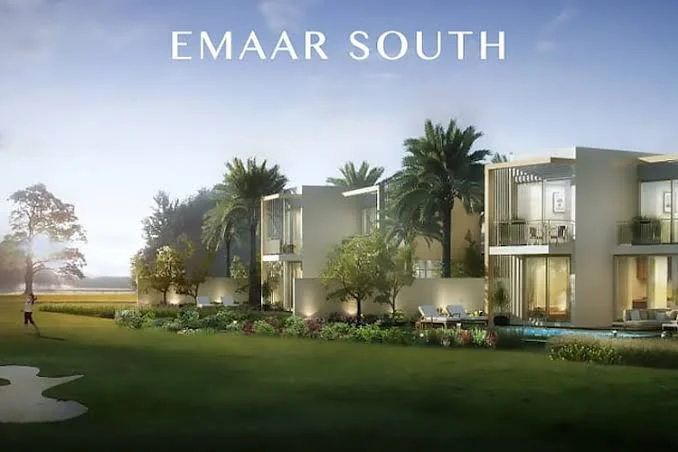
The long-term Emaar South investment story is closely linked to the development of Dubai South. Al Maktoum International Airport One of the biggest potential growth catalysts is Al Maktoum International Airport. Dubai Airports has outlined plans to significantly expand the airport, with its ultimate capacity expected to reach up to 260 million passengers annually. As the airport and surrounding economic ecosystem develop, the area could benefit from additional employment, business activity and residential demand. For Emaar South investors, this creates an important long-term off plan opportunity. However, airport expansion is a multi-year development, so investors should not assume that infrastructure announcements will automatically translate into immediate property price growth. Growth of Dubai South Emaar South is part of the broader Dubai South development, which is being positioned as a major economic and logistics hub. The area includes aviation, logistics, commercial and residential districts. As more businesses and workers move into the wider area, demand for nearby housing could increase. This is one of the main reasons Emaar South is attracting investors looking beyond established central-Dubai locations. Emaar's Master-Planned Community Another advantage is the community's master-planned environment. Emaar South combines residential developments with green areas, recreational facilities and an 18-hole golf course. This gives it a different positioning from high-density communities focused primarily on apartments. The lifestyle offering can help attract families and tenants seeking larger homes and a quieter residential environment.
Apartments vs Townhouses vs Villas
Choosing the right property type is essential when considering an Emaar South investment. Apartments Apartments generally have a lower entry price than townhouses and villas, making them accessible to a broader range of investors. They can also appeal to investors primarily focused on rental income because of the lower capital requirement. Townhouses Townhouses offer more space and can appeal strongly to families. However, higher purchase prices do not necessarily result in higher rental yields. Investors should compare the expected rental income with the total acquisition cost before choosing a townhouse. Villas Villas require greater capital but can provide a stronger lifestyle proposition and appeal to families seeking larger homes. For long-term investors, villas may offer potential capital appreciation, but the higher purchase price means that investors should carefully evaluate rental yield and liquidity. There is therefore no universally "best" property type in Emaar South. The right choice depends on the investor's budget, return expectations and investment horizon.
Is Emaar South Better for Long-Term Investment?
Emaar South is generally more suitable for investors with a medium- to long-term investment horizon. The community's potential is closely linked to the continued development of Dubai South, infrastructure expansion and increasing economic activity in the surrounding area. Investors looking for immediate resale liquidity or short-term speculative gains may find more established Dubai communities better suited to their strategy. On the other hand, investors willing to hold a property through the community's development cycle could benefit from a combination of rental income and potential capital appreciation.
Conclusion
Emaar South should not be viewed simply as a short-term property price opportunity. Its investment case is based on the continued development of a major Dubai growth corridor. For investors who choose the right property, maintain realistic rental expectations and have a sufficiently long investment horizon, Emaar South could offer an attractive combination of rental income and long-term growth potential in 2026.
Frequently Asked Questions
What is the rental yield in Emaar South?+
Rental yields vary by property type, project and purchase price. Current market data generally places Emaar South rental yields in the mid-single-digit range, but investors should calculate net yield rather than relying solely on headline figures.
Is Emaar South good for rental investment?+
It can be suitable for rental investment, particularly when investors purchase properties at competitive prices and select units with strong tenant demand.
What are the main risks of investing in Emaar South?+
The key risks include future property supply, the developing nature of the community, infrastructure timelines and differences in rental and resale performance between individual projects.
Is Emaar South suitable for long-term investment?+
Yes. Its investment case is closely tied to the ongoing development of Dubai South and the Al Maktoum Airport expansion, both multi-year projects, making it better suited to patient, long-term capital.
What is driving Emaar South's growth potential?+
The primary driver is Al Maktoum International Airport (DWC), a AED 128 billion expansion that includes an Emirates Cabin Crew Village for up to 12,000 staff, plus the wider Dubai South master plan and a planned Metro Blue Line extension.